In the vast landscapes of aerospace, petrochemical, and precision manufacturing industries, every microscopic component serves as a cornerstone supporting industrial operations. Yet beneath this mechanical harmony lies an often-overlooked vulnerability—a micron-level surface crack or hidden corrosion point can transform into the modern industrial equivalent of Achilles' heel, capable of crippling billion-dollar equipment or triggering catastrophic failures.
I. Eddy Current Testing: The Electromagnetic Lens Revealing Microscopic Flaws
Imagine identifying material defects without disassembly or surface preparation—this is the revolutionary promise of Eddy Current Testing (ECT). The technology operates on Faraday's law of electromagnetic induction: when alternating current passes through a probe coil, it generates an electromagnetic field that induces eddy currents in conductive materials. Any internal discontinuity—whether cracks, pores, corrosion, or variations in material properties—disturbs these currents, creating measurable changes in coil impedance.
For industries, this translates to non-contact inspection with exceptional sensitivity. From jet engine blades to oil pipelines, ECT provides reliable quality assurance without material degradation. The technology has become indispensable for both quality control and preventive maintenance across critical sectors.
II. The Industrial Vanguard: Advanced Portable Inspection Systems
Standard inspection equipment often falters under extreme industrial conditions. Modern portable ECT instruments, however, are engineered to withstand these challenges while delivering laboratory-grade precision.
1. Multifunctional High-Performance Systems
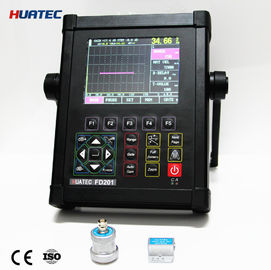
The latest generation of portable ECT units combine traditional testing with cutting-edge array technology:
- Intuitive Imaging: Advanced signal processing converts complex impedance data into visual representations, reducing operator dependence on subjective interpretation.
- Dual-Frequency Analysis: This feature effectively filters background noise when inspecting geometrically complex components like fastener holes, significantly improving detection accuracy.
- Industrial Durability: Designed to maintain stability under vibration, dust, and extreme temperatures, these systems perform reliably in environments ranging from offshore platforms to aircraft maintenance hangars.
2. Compact Efficiency for Field Applications
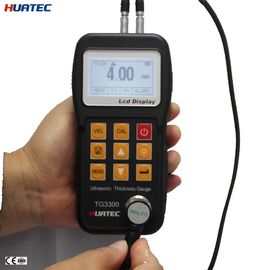
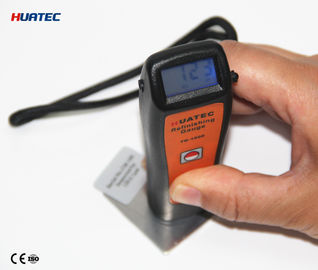
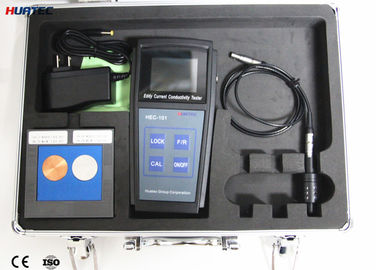
For space-constrained environments requiring frequent mobility, streamlined versions offer balanced performance. These units incorporate high-resolution displays that remain legible under varying light conditions, making them ideal for rapid assessments and routine inspections.
III. The Paradigm Shift: From Spot Checks to Comprehensive Mapping
Traditional single-channel ECT probes face efficiency limitations when scanning large areas. The industry's transition to Eddy Current Array (ECA) technology represents a quantum leap—if single-channel inspection resembles using a flashlight, ECA systems provide full floodlight illumination.
By integrating multiple sensors, array probes simultaneously cover wider inspection zones while generating detailed two-dimensional defect maps. This advancement not only accelerates inspection cycles but also enables quantitative defect evaluation through data visualization—a critical component of modern digital quality management systems.
IV. Strategic Implementation in Industrial Ecosystems
Effective ECT deployment requires more than equipment procurement—it demands comprehensive quality management integration. Leading solutions address these operational realities through:
- Application-specific configurations for different material defects
- Robust environmental adaptability with extended battery life
- Advanced data recording capabilities for traceability and predictive analysis
As industries progress toward Industry 4.0 standards, preventive maintenance technologies like advanced ECT systems are transitioning from optional tools to essential components of operational infrastructure. These systems now represent integrated platforms combining precision sensing, sophisticated signal processing, and intelligent imaging—all contributing to enhanced safety and efficiency across industrial sectors.


 Ваше сообщение должно содержать от 20 до 3000 символов!